sivaraml
Śrī Mātre Namaḥ. The Yoginīs listed as Group A can be found on page 205 of Yogini Cult and Temples – A Tantric Tradition by Vidya Dehejia.
https://archive.org/details/yogini-cult-and-temples-a-tantric-tradition-by-vidya-dehejia-national-museum-new-delhi-1986-1/page/205/mode/2up?q=skanda
Below is the extract from the above book.
237. mahācatuṣṣaṣṭikoṭiyoginīgaṇasevitā
She who is attended (served) by sixty-four crores of bands of yoginis
Yogini Cult and Temples, Vidya Dehejia
“She who is served by 64 crores of groups of Yoginis” is one of the thousand titles of the Goddess. The Kālī Tantra describes Kālī or Śyāmā as attended upon by a thousand Yoginīs, while Mahābhāgavata Purāṇa describes the Yoginīs as servants and functionaries of the Goddess. The Kālikā Purāṇa mentions twelve Yoginīs as the close companions of Devī. At some stage the number of Yoginīs became conventionalised to sixty-four, although their names, descriptions and attributers do not appear to have been standardized. The concept of the Yoginīs as deities attendant upon Devī also appears to have arisen as a means of incorporation of the goddesses into the orthodox fold.
Yoginīs as Acolytes of the Great Goddess: the Mātṛkās
An important tradition derives the sixty-four Yoginīs in groups from the Aṣṭa Mātṛkās or Eight Mothers. From very early times we know that the Sapta Mātṛkās or Seven Mothers, as an independent group of goddesses later expanded to eight, nine or sixteen, were popularly worshipped all over India. The familiar Devīmāhātmyam story of the origin of the Mothers tells of how seven of the gods sent their female energies (śaktis) who had the same attributes and powers as themselves and were their female counterparts, to help Devī in her great battle against the demons. These goddesses, Brahmī, Māheśvarī, Kaumārī, Vaiṣṇavī, Vārāhī, Aindrī and Nārasiṃhī, were highly effective in helping Devī Caṇḍikā destroy the demon armies. When the demon Śumbha taunted Devī and scoffed at her for fighting with the strength of others, Caṇḍikā absorbed these goddesses into her own body and then killed the demon. Shrines dedicated to the Mothers are to be found in every part of India and their cult was particularly popular in Orissa where many of the Mātṛkā images are over life-size in dimension.
The tradition deriving the sixty-four Yoginīs from the eight Mātṛkās is contained in the 146th chapter of the Agni Purāṇa. The eight Mothers are Brahmī, Māheśvarī, Kaumārī, Vaiṣṇavī, Vārāhī, Aindrī, Camuṇḍā and Mahālakṣmī. The sixty-four Yoginis are derived from the eight Mātṛkās in groups of eight (once of none and once of seven). Each group of Yoginīs is described as belonging to the family (kula) of one or other of the Mothers or as being born (sambhava) from a Mother. Since the Mātṛkās themselves are considered to be emanations of Devī and aspects of the Divine Female, the Yoginīs emerging from them must also, by association, be considered divine or semi-divine and as acolytes of the Great Goddess. Such a concept too seems to have arisen with the assimilation of the Yoginīs into the orthodox fold.
The derivation of sixty-four Yoginīs from the eight Mātṛkās became an accepted tradition as may be seen from the commentaries on several texts including also Bhaskararaya’s commentary to the Lalitā Sahasranāma.
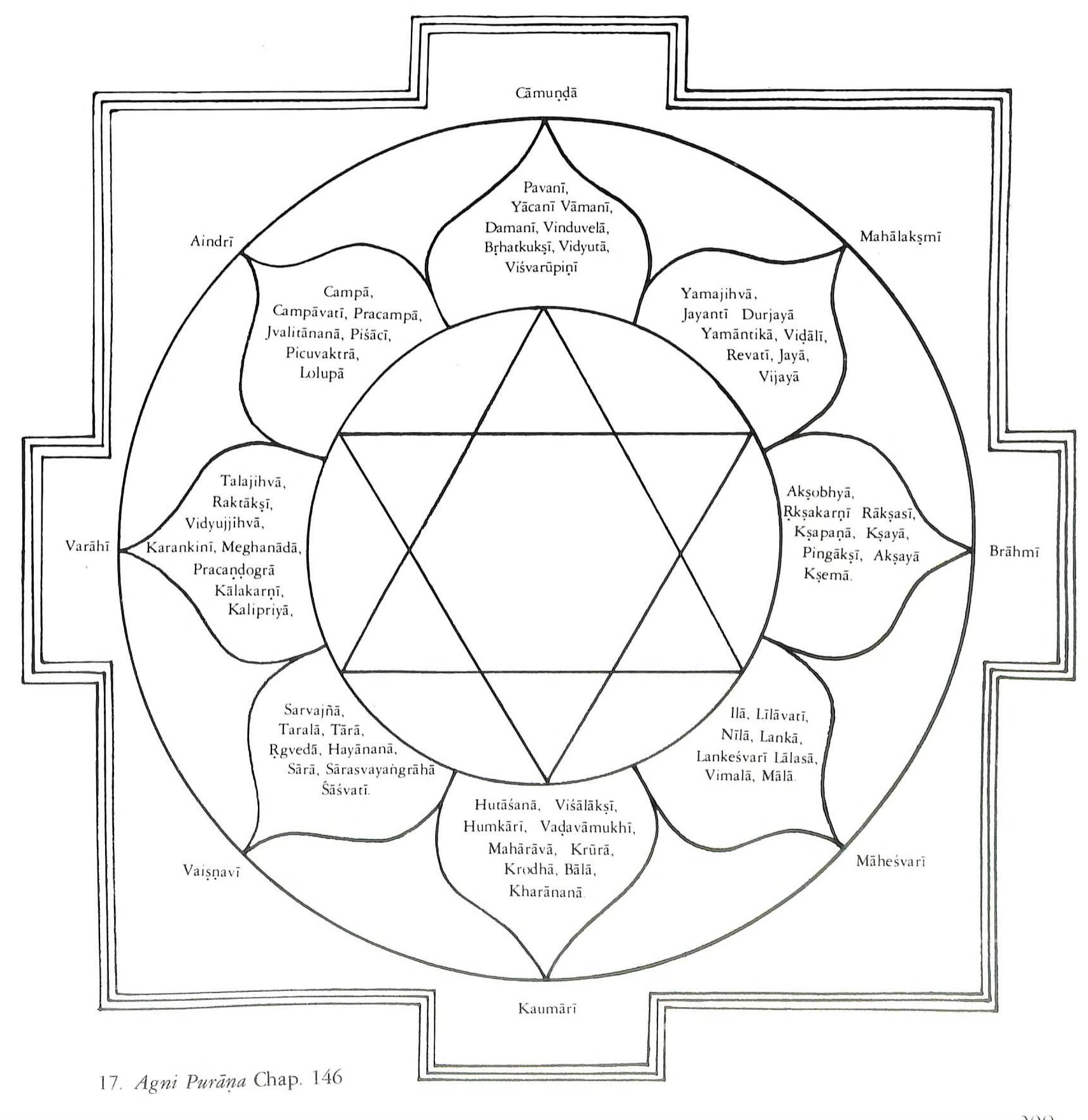
Brahmī: (1) Akṣobhyā, (2) Ṛkṣakarṇī, (3) Rākṣasī, (4) Kṣapaṇā, (5) Kṣayā, (6) Piṅgākṣī, (7) Akṣayā, (8) Kṣemā
Māheśvarī: (1) Ilā, (2) Līlāvatī, (3) Nīlā, (4) Laṅkā, (5) Laṅkeśvarī, (6) Lālasā, (7) Vimalā, (8) Mālā
Kaumārī: (1) Hutāśanā, (2) Viśālākṣī, (3) Hūṅkārī, (4) Vaḍavāmukhī, (5) Mahāravā, (6) Krūrā, (7) Krodhā, (8) Bālā, (9) Kharānanā
Vaiṣṇavī: (1) Sarvajñā, (2) Taralā, (3) Tārā, (4) Ṛgvedā, (5) Hayānanā, (6) Sārā, (7) Sārasvayaṃgrāhā, (8) Śāśvatī
Vārāhī: (1) Tālujihvā, (2) Raktākṣī, (3) Vidyujjihvā, (4) Karaṅkiṇī, (5) Meghanādā, (6) Pracaṇḍogrā, (7) Kālakarṇī, (8) Kalipriyā
Aindrī: (1) Campā, (2) Campāvatī, (3) Pracampā, (4) Jvalitānanā, (5) Piśācī, (6) Picuvaktrā, (7) Lolupā
Cāmuṇḍā: (1) Pāvanī, (2) Yācanī, (3) Vāmanī, (4) Dāmanī, (5) Vinduvelā, (6) Bṛhatkukṣī, (7) Vidyutānanā, (8) Viśvarūpiṇī
Mahālakṣmī: (1) Yamajihvā, (2) Jayantī, (3) Durjayā, (4) Yamāntikā, (5) Biḍālī [Viḍālī], (6) Revatī, (7) Jayā, (8) Vijayā

